Improving Performance Evaluation Efficiency at Darut Taqwa Vocational School through AI and Manufacturing Engineering
Keywords:
AI-based learning media, human resource performance evaluation, industrial engineering methodology, teacher satisfactionAbstract
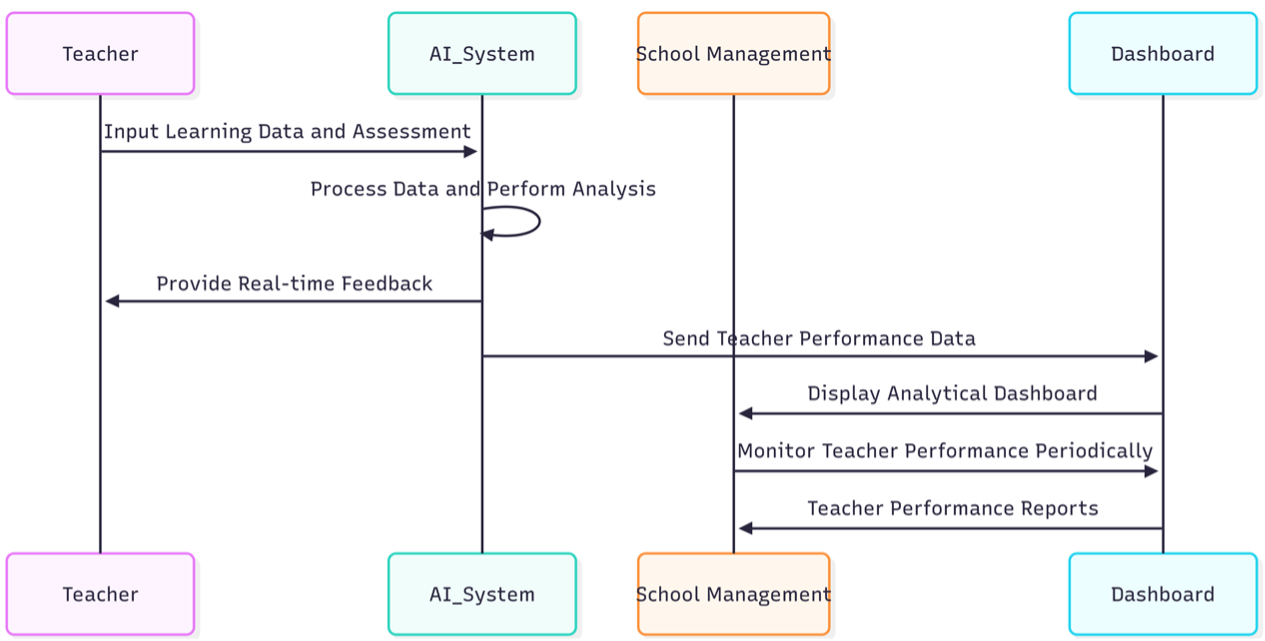
This study aims to optimize human resource (HR) performance evaluation at SMK Darut Taqwa through the integration of AI-based learning media and industrial engineering methodology. The study involved 400 students and 70 teachers, focusing on the development of an AI-based performance evaluation system integrated with adaptive learning media tailored to individual needs. Industrial engineering methodology was used to analyze the efficiency of the evaluation process and to design a system that could identify and enhance sustainable HR development. The results of the study showed a 17% increase in evaluation objectivity, a 40% reduction in evaluation time, and a 20% increase in teacher satisfaction. Additionally, the system optimized real-time feedback, which contributed to the development of teacher competencies. This research resulted in a replicable HR performance evaluation model, which can be adopted by other educational institutions to improve teaching quality and performance. The authors are fully committed to adhering to the ethics of scientific publication, including the originality of the work, honesty in data collection and interpretation, and recognizing the contributions of others, ensuring that this research provides a valid and trustworthy contribution to the advancement of educational science.
References
Asabere, N.Y., & Gyamfi, N.K. (2013). AIDSS-HR: An Automated Intelligent Decision Support System for Enhancing the Performance of Employees. IJCSN International Journal of Computer Science and Network ISSN, 2(4), 2277–5420.
Baskara, DS, Gunadi, S., & Muttaqin, N. (2025). Integrating Artificial Intelligence in Human Resources Management: A Bibliometric Analysis of Emerging Trends and Influences. Applied Information Systems and Management (AISM), 8(1), 11–18. https://doi.org/10.15408/aism.v8i1.40352
Bohlouli, M., Mittas, N., Kakarontzas, G., Theodosiou, T., Angelis, L., & Fathi, M. (2017). Competence assessment as an expert system for human resource management: A mathematical approach. In Expert Systems with Applications (Vol. 70). https://doi.org/10.1016/j.eswa.2016.10.046
Cahyatih Kumandang, Ruslaini Ruslaini, Seger Santoso, & Muhammad Rizal. (2022). Optimizing Organizational Performance: Exploring The Integration Of AI And HR Practices. The International Conference on Education, Social Sciences and Technology (ICESST), 1(2), 269–277. https://doi.org/10.55606/icesst.v1i2.381
Chowdhury, S., Dey, P., Joel-Edgar, S., Bhattacharya, S., Rodriguez-Espindola, O., Abadie, A., & Truong, L. (2023). Unlocking the value of artificial intelligence in human resource management through the AI capability framework. Human Resource Management Review, 33(1), 100899. https://doi.org/10.1016/j.hrmr.2022.100899
Dzulfian Syafrian, et al. (2025). No.主観的健康感を中心とした在宅高齢者における 健康関連指標に関する共分散構造分析Title. Sustainability (Switzerland), 11(1), 1–14.
Fatimatuzzahra, & Hidayat, A. (2024). Improving Activity, Critical Thinking and Learning Outcomes in Civics Content Using the Door Model in Class V of Sdn Manarap Lama 1. Didactics: Scientific Journal of PGSD FKIP Universitas Mandiri, 10(04), 212–222.
Fragiadakis, G., Diou, C., Kousiouris, G., & Nikolaidou, M. (2025). Evaluating Human-AI Collaboration: A Review and Methodological Framework.
Gupta, P., Lakhera, G., & Sharma, M. (2024). Examining the impact of artificial intelligence on employee performance in the digital era: An analysis and future research directions. Journal of High Technology Management Research, 35(2), 100520. https://doi.org/10.1016/j.hitech.2024.100520
Gutara, MY, Pogo, T., & Saluy, AB (2021). The Influence of Training, Work Motivation, and Professional Competence on Teacher Performance. Indikator: Scientific Journal of Management and Business, 5(2), 73–81.
Hindra Kurniawan, Adiguna Sasama WU, & Tambunan, RW (2024). The Potential of AI in Enhancing Creativity and Literacy in Indonesian Language Learning. JAMI: Journal of Young Indonesian Experts, 5(1), 10–17. https://doi.org/10.46510/jami.v5i1.285
Industry, ERA, Case, S., Smk, DI, & Adah, A. (2025). 1 Copyright © 2025 to the author. 1–6.
Kurniawan, S., Rahman, MA, & Sugiarno, Y. (2025). Development of Adaptive Learning Media Using AI-Based Programming and Educational Psychology at SMPN 2 Candi. Journal of Information System and Education Development, 3(2), 5–11. https://doi.org/10.62386/jised.v3i2.131
Mayangsari, N. (2013). Evaluation of Internal Control Using the Lean Six Sigma Method to Increase Effectiveness and Efficiency in Goods Delivery Activities at PT. Olivia Arlly Belle Surabaya. Calyptra: Scientific Journal of Students of the University of Surabaya, 2(2), 1–18.
Melina Sari, & Titin Hargyatni. (2025). Optimizing HR Efficiency and Employee Well-being through AI-Driven Automation. Management, 5(1), 153–164. https://doi.org/10.51903/manajemen.v5i1.936
Mollaei, N., Fujao, C., Rodrigues, J., Cepeda, C., & Gamboa, H. (2023). Occupational health knowledge discovery based on association rules applied to workers' body parts protection: a case study in the automotive industry. Computer Methods in Biomechanics and Biomedical Engineering, 26(15), 1875–1888. https://doi.org/10.1080/10255842.2022.2152678
Murugesan, U., Subramanian, P., Srivastava, S., & Dwivedi, A. (2023). A study of Artificial Intelligence impacts on Human Resource Digitalization in Industry 4.0. Decision Analytics Journal, 7(May), 100249. https://doi.org/10.1016/j.dajour.2023.100249
Muslikhin, M. (2024). Development of a Competency-Based Teacher Performance Assessment Model to Improve Accountability in Education. Unisan Journal: Journal of Management and Education, 3(2), 899–909.
Nosratabadi, S., Zahed, R.K., Ponkratov, V.V., & Kostyrin, E.V. (2022). Artificial Intelligence Models and Employee Lifecycle Management: A Systematic Literature Review. Organization, 55(3), 181–198. https://doi.org/10.2478/orga-2022-0012
Pan, Y., & Froese, F. J. (2023). An interdisciplinary review of AI and HRM: Challenges and future directions. Human Resource Management Review, 33(1), 100924. https://doi.org/10.1016/j.hrmr.2022.100924
Plakantara, S.P., Karakitsiou, A., & Mantzou, T. (2024). Managing Risks in Smart Warehouses from the Perspective of Industry 4.0. In Springer Optimization and Its Applications (Vol. 214, pp. 1–47). Springer. https://doi.org/10.1007/978-3-031-58919-5_1
Prahara, AG, & Nawangpalupi, CB (2021). Integration of Change Management in Lean Six Sigma Projects to Improve Company Quality and Performance. Journal of Industrial Systems Engineering, 10(2), 113–120. https://doi.org/10.26593/jrsi.v10i2.4064.113-120
Putra, YW, Kristina, HJ, & Saryatmo, MA (2025). Implementation of Lean Six Sigma in Efforts to Improve Quality and Process Efficiency in Embossed Signage Production. Jurnal Mitra Teknik Industri, 3(3), 222–232. https://doi.org/10.24912/jmti.v3i3.33044
Ruengdech, C., Howimanporn, S., Intarakumthornchai, T., & Chookaew, S. (2024). Implementing a Risk Assessment System of Electric Welders' Muscle Injuries for Working Posture Detection with AI Technology. International Journal of Online and Biomedical Engineering, 20(4), 84–95. https://doi.org/10.3991/ijoe.v20i04.46465
Sari, DW, Ayu, KG, & Edyana, F. (2024). IMPLEMENTATION OF AI-BASED ConKer APPLICATION IN REFORMED VOCATIONAL SCHOOL. Madani: Journal of Community Service, 10(1), 51–60.
Sri Dwijayanti, N., & Sari, N. (2021). Teacher Performance Professionalism and Teacher Digital Literacy Skills Influence the Quality of Online Learning in Jambi City Vocational High Schools. Jurnal Ilmiah Dikdaya, 11(2), 161. https://doi.org/10.33087/dikdaya.v11i2.211
Tusriyanto, Sulaeman, MM, & Nurcholidah, L. (2023). Optimizing Organizational Performance Through Human Resource Management Strategy and Technology Integration to Enhance Innovation. Technology and Society Perspectives (TACIT), 1(3), 139–147. https://doi.org/10.61100/tacit.v1i3.81
Varma, A., Pereira, V., & Patel, P. (2024). Artificial intelligence and performance management. Organizational Dynamics, 53(1), 101037. https://doi.org/10.1016/j.orgdyn.2024.101037
Wibowo, EP, Bailatul, Z., Avian, N., Putra, F., Tarigan, P., & Syah, I. (2024). The Role of AI in Enhancing HRM Practices A Comparative Study Across Industries. Management Studies and Business Journal (PRODUCTIVITY), 1(9), 1366–1378.
Yeni, D.F., Rahmatika, D., Muriani, M., & Armi Eka Putri, D. (2023). The Effect of Using Digital Learning Media on Student Learning Outcomes. Edu Journal Innovation in Learning and Education, 1(2), 93–102. https://doi.org/10.55352/edu.v1i2.571
Yusuf, M. (2023). Application of the Lean Six Sigma Method in Improving the Efficiency of Islamic Education Offices. … of Islamic Education Management, 1, 123–133.
Downloads
Published
How to Cite
Issue
Section
License
Copyright (c) 2025 Rudi Kurniawan

This work is licensed under a Creative Commons Attribution-NonCommercial-ShareAlike 4.0 International License.
This material is licensed under the Creative Commons Attribution-NonCommercial-ShareAlike 4.0 International (CC BY-NC-SA 4.0). This license permits users to copy, distribute, and adapt the material, provided that appropriate credit is given, a link to the license is provided, and any modifications are clearly indicated. The material may only be utilized for non-commercial purposes and must not be exploited for commercial gain. Any derivative works, adaptations, or modifications must be distributed under the same license as the original. For further details, please refer to the Creative Commons BY-NC-SA 4.0.
 Chers Publishers